
What Are Peptides?
A literature-referenced introduction to peptides — short chains of amino acids that serve as the signaling and structural molecules at the center of modern biochemical research.
Research Use Only. All products are sold strictly for laboratory and scientific research purposes — not for human or veterinary use. The information below is an educational summary of the scientific literature, not medical, therapeutic, or usage guidance.
What a Peptide Is
A peptide is a short chain of amino acids linked end-to-end by covalent peptide bonds — amide linkages formed when the carboxyl group of one amino acid condenses with the amino group of the next, releasing a molecule of water.1 Because twenty standard amino acids can be arranged in any order, even a short peptide encodes a precise sequence, and that sequence — the primary structure — determines how the molecule folds and what it can interact with.1
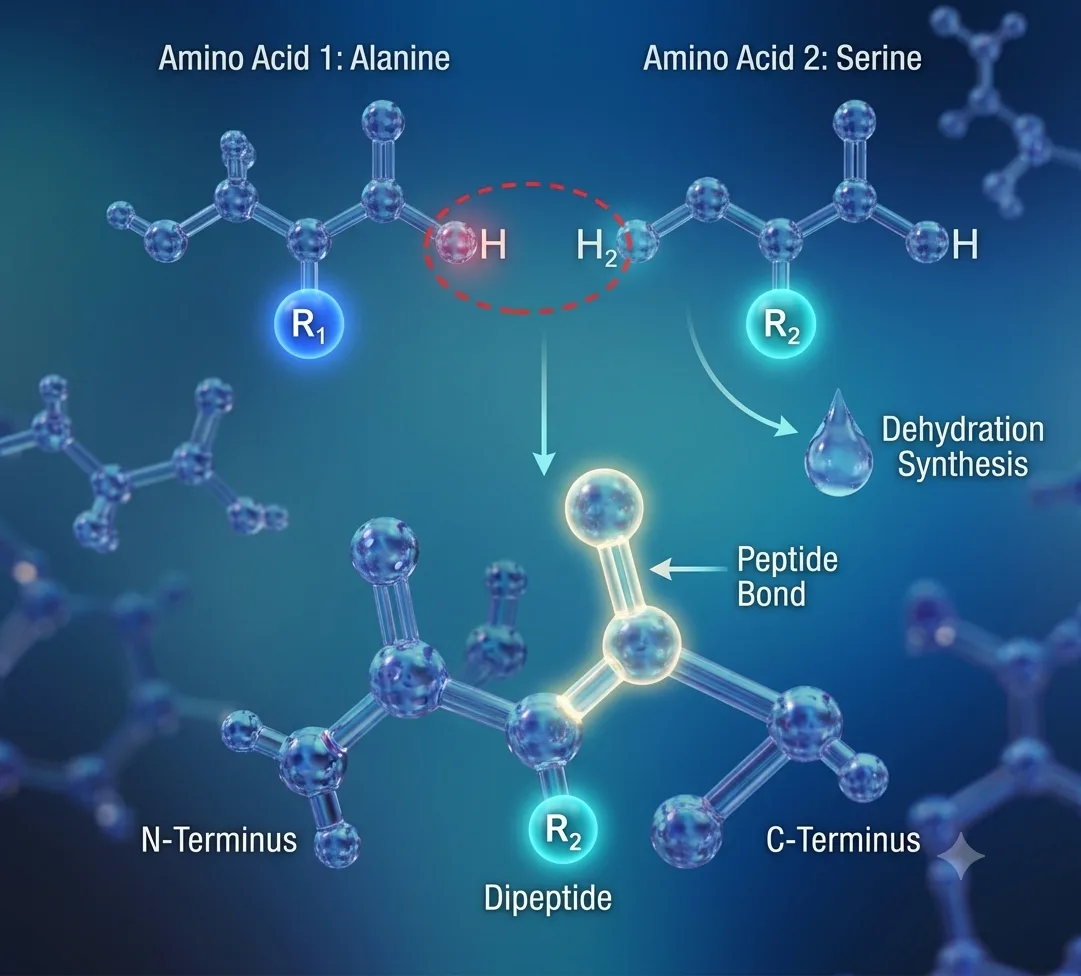
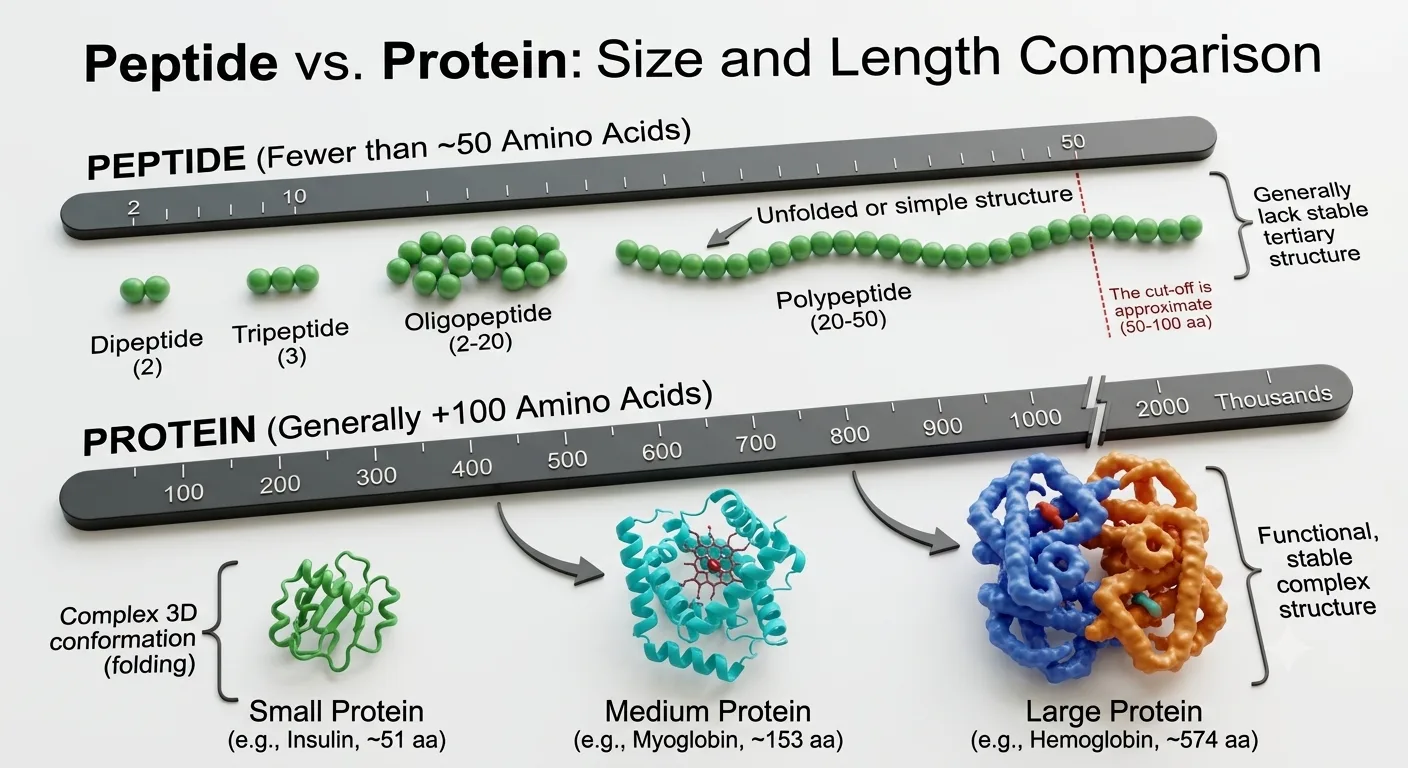
Peptides and proteins are chemically the same kind of molecule; the distinction is largely one of length and organization. By common convention, chains of roughly fifty or fewer residues are called peptides, while longer chains that fold into stable three-dimensional shapes are called proteins.1 This is a continuum rather than a hard boundary, and the threshold is a matter of usage, not a law of chemistry.
How Peptides Work, Conceptually
At a general level, many biologically active peptides function as signaling molecules. A peptide with a complementary shape and chemistry binds to a specific receptor — frequently a cell-surface protein — and that binding event changes the receptor's conformation, which in turn triggers a cascade of intracellular events known as signal transduction.1 The specificity of this interaction is a direct consequence of the peptide's sequence: small changes to the amino acids can alter, weaken, or abolish receptor recognition.1
This receptor-and-signal framework is one of the central reasons peptides are studied so intensively — they offer a way to probe how specific molecular sequences map onto specific biochemical responses in cells and tissues.14
A Brief History of Peptide Research
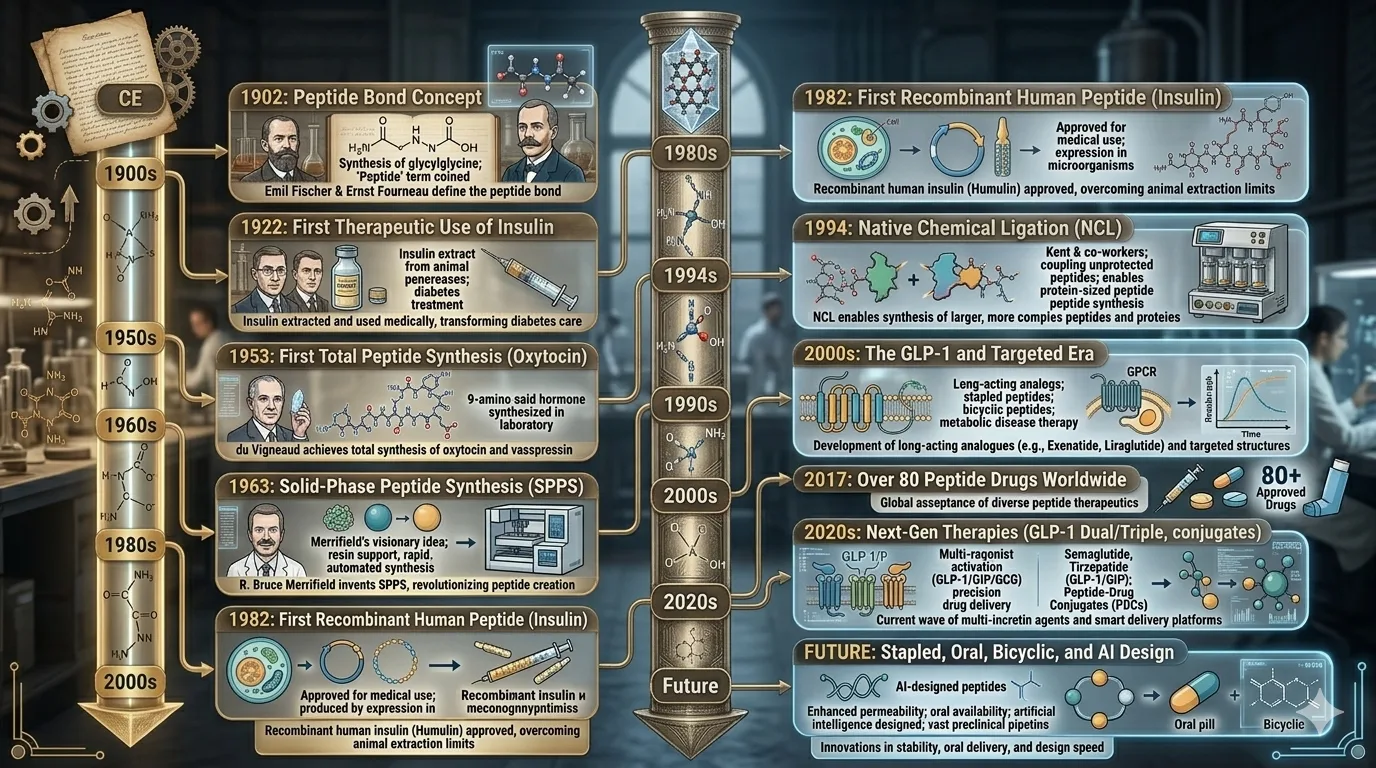
-
1921–1922
Isolation of insulin. Banting and Best, working in Macleod's laboratory, isolated the pancreatic hormone insulin — a landmark in the study of peptide and protein hormones.3 The work was recognized with the 1923 Nobel Prize.13
-
1951–1955
First protein sequence. Sanger and Tuppy determined the amino-acid sequence of the insulin chains — the first complete sequence of any protein — establishing that these molecules have a defined, reproducible primary structure.2
-
1953
First synthesized peptide hormone. du Vigneaud and colleagues reported the chemical synthesis of oxytocin, an octapeptide, demonstrating that a biologically active peptide hormone could be built in the laboratory.4
-
1963
Solid-phase peptide synthesis. Merrifield introduced solid-phase peptide synthesis (SPPS), anchoring the growing chain to an insoluble support so reagents could be added and washed away in cycles. SPPS transformed peptide chemistry from a specialist art into a routine, scalable method.513
-
1980s
Characterization of signaling peptides. The identification and characterization of regulatory peptides such as glucagon-like peptide-1 (GLP-1) helped open the modern era of peptide research, in which specific endogenous sequences are studied as discrete signaling agents.6
Classes of Research Peptides
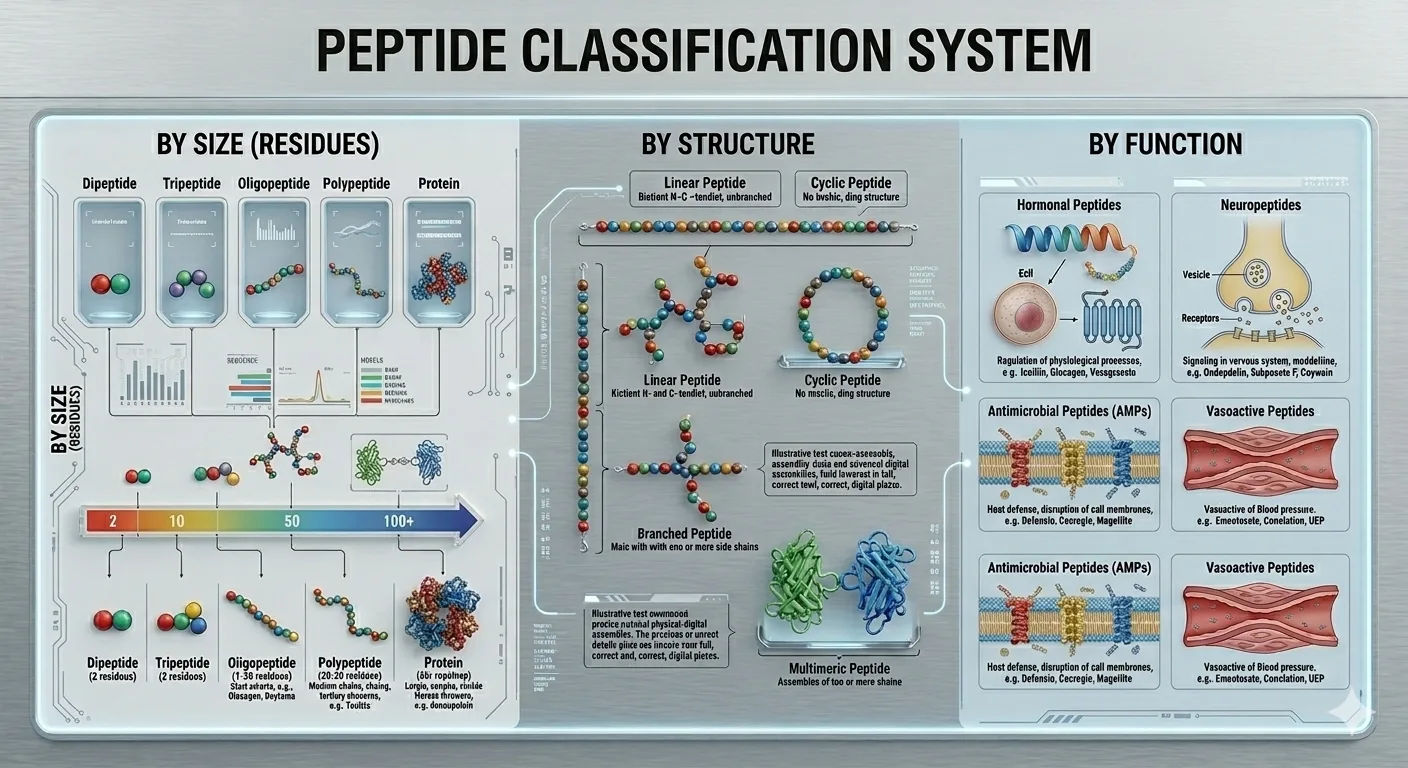
Peptides studied in research settings are commonly grouped by biological role rather than by a single chemical property.78 The categories below are an educational framework, not a product listing.
Signaling & regulatory peptides
Sequences that act on receptors to modulate biochemical pathways — peptide hormones and neuropeptides are the classic examples studied in this group.7
Structural peptides
Sequences associated with the architecture of tissues and the extracellular matrix, studied for how primary structure relates to assembly and stability.1
Carrier & transport peptides
Sequences investigated for their role in binding and moving smaller molecules or ions within biological systems.15
Host-defense (antimicrobial) peptides
A broad class studied for sequence–membrane interactions and their role in innate biological defense across many organisms.16
Areas of Active Research
The following describes what the scientific literature investigates. It does not describe outcomes, benefits, or effects in humans, and nothing here should be read as a claim about any product.
- Metabolic and endocrine signaling. A large body of literature examines how regulatory peptides participate in glucose-dependent and hormonal signaling pathways in preclinical and in vitro models.67
- Peptide therapeutics and drug discovery. Reviews survey how peptides are evaluated as molecular tools and candidates, including trends in design, stability, and delivery.78
- Tissue and matrix biology. In vitro and animal studies investigate peptides implicated in extracellular-matrix and repair-related signaling models.17
- Receptor pharmacology and neuropeptides. Research characterizes how peptide sequences engage specific receptors in the nervous system and elsewhere.18
- Antimicrobial and host-defense activity. Literature studies how host-defense peptides interact with microbial membranes and contribute to innate defense.19
Working With Research Peptides
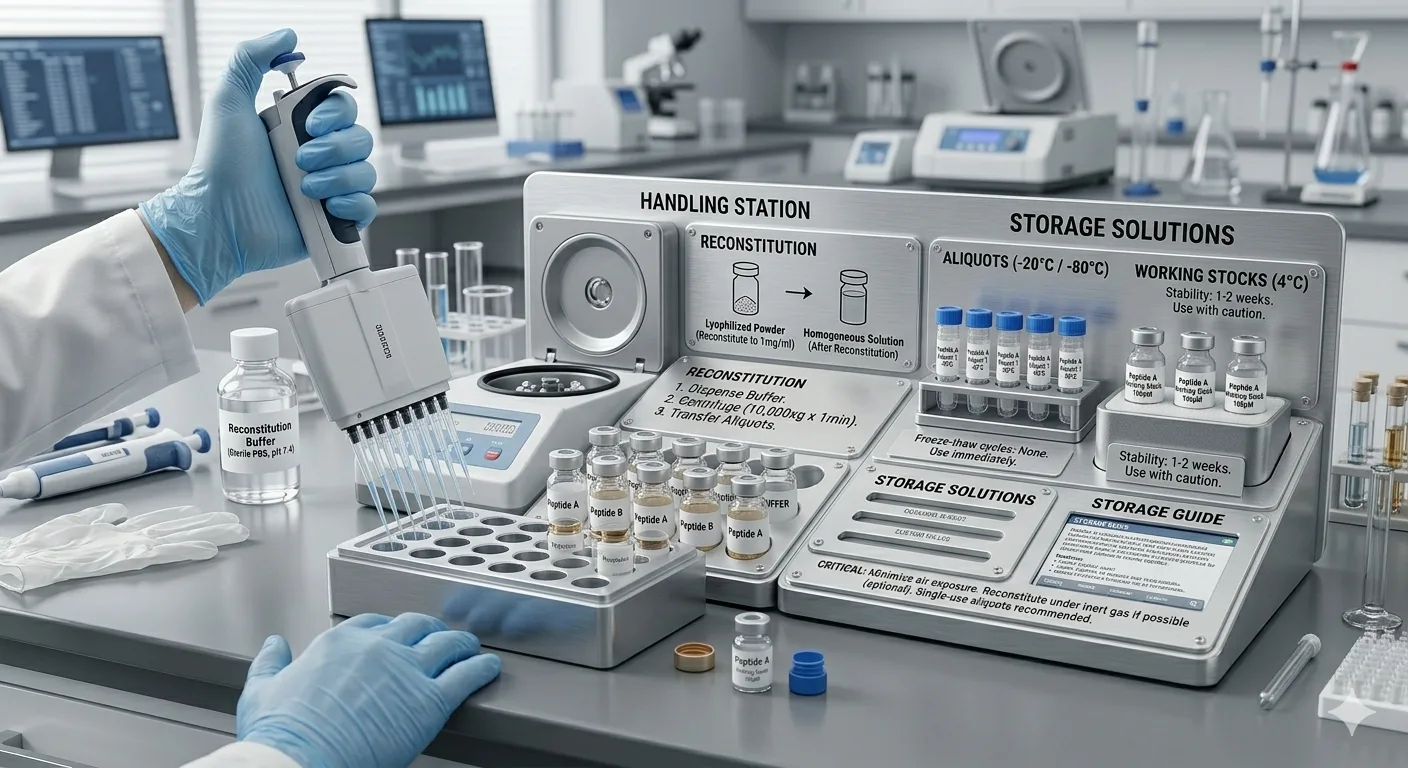
Research peptides are most often supplied as a lyophilized (freeze-dried) solid. Lyophilization removes water under vacuum, leaving a dry powder that is generally more stable for transport and storage than a peptide in solution.20
Reconstitution
Reconstitution is the laboratory step of dissolving the dried peptide in an appropriate solvent to produce a defined-concentration stock for experimental work. Solvent choice and concentration depend on the specific sequence and the study protocol.21
Storage & handling
Peptide stability is sequence-dependent and sensitive to temperature, moisture, and repeated freeze–thaw cycles. Lyophilized material is typically stored cold and protected from moisture, with reconstituted stocks handled according to the experiment's requirements.22
Purity and the Certificate of Analysis
Because the behavior of a peptide in any assay depends on its identity and purity, characterization matters. Analytical methods such as HPLC and mass spectrometry are used to assess purity and confirm identity, and a Certificate of Analysis (COA) documents those results for a given lot.9
References & Further Reading
- Nelson DL, Cox MM, Hoskins AA. Lehninger Principles of Biochemistry. 8th ed. New York: Macmillan Learning; 2021.
- Sanger F, Tuppy H. The amino-acid sequence in the phenylalanyl chain of insulin. 1. The identification of lower peptides from partial hydrolysates. Biochem J. 1951;49(4):463–481. doi:10.1042/bj0490463. PMC1197535
- Banting FG, Best CH. The internal secretion of the pancreas. J Lab Clin Med. 1922;7(5):251–266. PubMed 3550540
- du Vigneaud V, Ressler C, Swan JM, Roberts CW, Katsoyannis PG, Gordon S. The synthesis of an octapeptide amide with the hormonal activity of oxytocin. J Am Chem Soc. 1953;75(19):4879–4880. doi:10.1021/ja01115a553.
- Merrifield RB. Solid phase peptide synthesis. I. The synthesis of a tetrapeptide. J Am Chem Soc. 1963;85(14):2149–2154. doi:10.1021/ja00897a025.
- Mojsov S, Weir GC, Habener JF. Insulinotropin: glucagon-like peptide I (7–37) co-encoded in the glucagon gene is a potent stimulator of insulin release in the perfused rat pancreas. J Clin Invest. 1987;79(2):616–619. doi:10.1172/JCI112855.
- Muttenthaler M, King GF, Adams DJ, Alewood PF. Trends in peptide drug discovery. Nat Rev Drug Discov. 2021;20(4):309–325. doi:10.1038/s41573-020-00135-8.
- Lau JL, Dunn MK. Therapeutic peptides: historical perspectives, current development trends, and future directions. Bioorg Med Chem. 2018;26(10):2700–2707. doi:10.1016/j.bmc.2017.06.052.
- Benoiton NL. Chemistry of Peptide Synthesis. Boca Raton, FL: CRC Press; 2006.
- National Center for Biotechnology Information (NCBI). PubMed. pubmed.ncbi.nlm.nih.gov. Accessed September 15, 2026.
- RCSB Protein Data Bank. rcsb.org. Accessed September 15, 2026.
- UniProt Consortium. UniProt. uniprot.org. Accessed September 15, 2026.
- The Nobel Prize. NobelPrize.org (Merrifield, Chemistry 1984; du Vigneaud, Chemistry 1955; Sanger, Chemistry 1958; Banting & Macleod, Medicine 1923). nobelprize.org. Accessed September 15, 2026.
- Krumm BE, Grisshammer R. Peptide ligand recognition by G protein-coupled receptors. Front Pharmacol. 2015;6:48. doi:10.3389/fphar.2015.00048. PMC4360564
- Pérez-Pérez M, Fuertes A, Montenegro J. Synthetic peptide scaffolds as ion channels and molecular carriers. Curr Opin Chem Biol. 2025;84:102563. doi:10.1016/j.cbpa.2024.102563. PubMed 39778387
- Zasloff M. Antimicrobial peptides of multicellular organisms. Nature. 2002;415(6870):389–395. doi:10.1038/415389a. PubMed 11807545
- de Castro Brás LE, Frangogiannis NG. Extracellular matrix-derived peptides in tissue remodeling and fibrosis. Matrix Biol. 2020;91–92:176–187. doi:10.1016/j.matbio.2020.04.006. PMC7434701
- Brain SD, Cox HM. Neuropeptides and their receptors: innovative science providing novel therapeutic targets. Br J Pharmacol. 2006;147(Suppl 1):S202–S211. doi:10.1038/sj.bjp.0706461. PMC1760747
- Auvynet C, Rosenstein Y. Multifunctional host defense peptides: antimicrobial peptides, the small yet big players in innate and adaptive immunity. FEBS J. 2009;276(22):6497–6508. doi:10.1111/j.1742-4658.2009.07360.x.
- Wang W. Lyophilization and development of solid protein pharmaceuticals. Int J Pharm. 2000;203(1–2):1–60. doi:10.1016/S0378-5173(00)00423-3. PubMed 10967427
- Merck (Sigma-Aldrich). Solubility Guidelines for Peptides [technical document]. sigmaaldrich.com. Accessed September 15, 2026.
- Manning MC, Chou DK, Murphy BM, Payne RW, Katayama DS. Stability of protein pharmaceuticals: an update. Pharm Res. 2010;27(4):544–575. doi:10.1007/s11095-009-0045-6. PubMed 20143256
Further Reading
- Nelson DL, Cox MM. Lehninger Principles of Biochemistry — foundational treatment of amino acids, peptide bonds, and protein structure (ref 1).
- Benoiton NL. Chemistry of Peptide Synthesis — fundamentals of how peptides are made (ref 9).
- RCSB Protein Data Bank (ref 11) and UniProt (ref 12) — primary reference databases for peptide and protein structure and sequence.
- PubMed (ref 10) and NobelPrize.org (ref 13) — for the original literature and verifiable history.
Research Compounds Available from All Peptides Direct
The following compounds are available in our catalog. All are supplied as lyophilized powder, third-party tested, ≥99% purity, with a Certificate of Analysis available for each lot. For research use only.